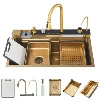
Stainless steel sinks have become a standard feature in modern kitchens due to their durability, aesthetics, and ease of cleaning. However, over time, limescale, grease, and food residue easily accumulate on the surface of stainless steel sinks. If not cleaned promptly, this not only affects their appearance but can also breed bacteria.
Basic Cleaning Tools Preparation
Soft cloth or sponge: Avoid using steel wool or abrasive brushes to prevent scratching the stainless steel surface.
Neutral detergent: Such as dish soap or a special stainless steel cleaner. Avoid using strong acids or alkalis that could corrode the material.
Clean water: Used to rinse away detergent residue.
Cleaning Steps
Remove debris: Wipe away any remaining food residue and water in the sink with paper towels or a soft cloth.
Apply detergent: Squeeze neutral detergent onto a soft cloth or sponge and apply evenly to the inside walls, bottom, and edges of the sink.
Gently wipe: Gently wipe in circular motions, paying special attention to areas prone to dirt accumulation such as faucets and drains.
Rinse thoroughly: Rinse thoroughly with running water to ensure no detergent residue remains. Wipe away water stains: Use a dry cloth or kitchen paper to absorb moisture and prevent limescale buildup.