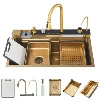
In terms of industry standards, the production and testing of stainless steel sinks are subject to strict regulations. Generally, the material of stainless steel sinks should conform to relevant national standards, such as 304 stainless steel. Simultaneously, the dimensions, shape, thickness, and other parameters of the sink must also meet industry standards to ensure its performance and safety. Furthermore, the surface treatment process of stainless steel sinks is also an important indicator of their quality. High-quality stainless steel sinks should have a smooth, flawless, and scratch-free surface with good corrosion resistance.
When choosing a stainless steel sink, consumers also need to consider other factors. The depth and width of the sink should be selected according to actual usage needs to ensure it can meet the requirements of washing. At the same time, the drainage design of the sink is also an important factor to consider. A good drainage design ensures that water in the sink can drain quickly, preventing water accumulation. In addition, consumers can choose different styles and colors of stainless steel sinks according to their preferences and kitchen decoration style to create a personalized kitchen space.
Stainless steel sinks have many characteristics, such as corrosion resistance, easy cleaning, and aesthetic appeal. It also offers a variety of sizes and styles of stainless steel sinks for consumers to choose from, to meet the needs of different scenarios.